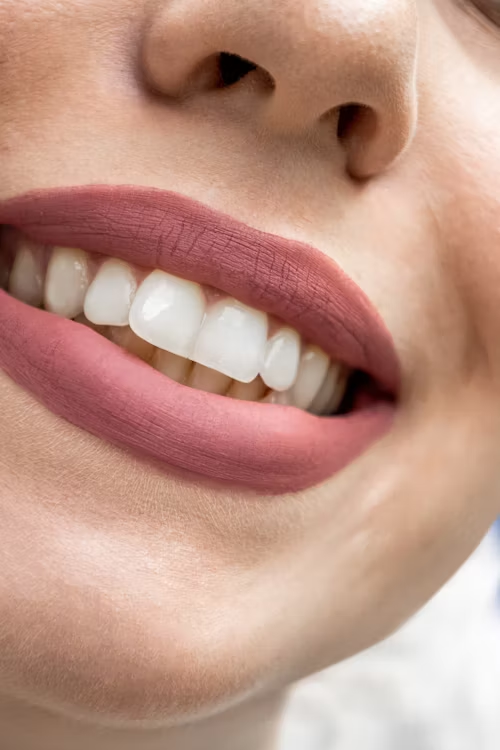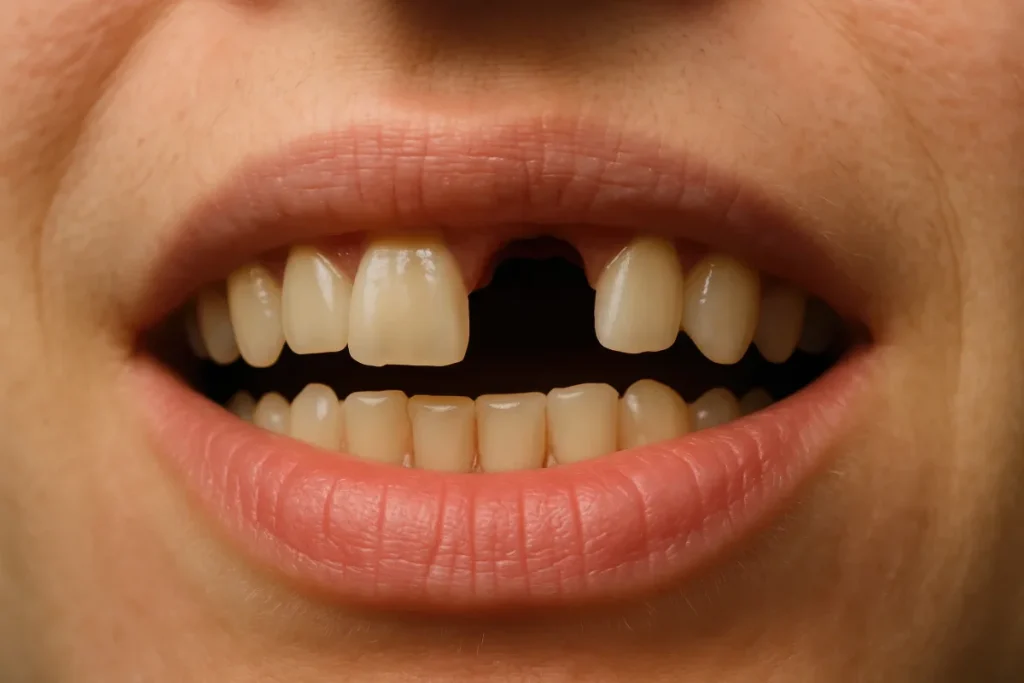
Tooth loss creates far more complications than an incomplete smile. The missing teeth problems you’re facing extend beyond aesthetics, affecting your ability to eat, speak, and maintain overall health. Whether you’re missing one tooth or several, understanding these common missing teeth problems helps you recognize the urgency of seeking treatment and protecting your remaining teeth from further damage.
One of the most immediate missing teeth problems involves struggling to enjoy your favorite foods. According to the Journal of Prosthodontics, people with tooth loss experience a 25-30% reduction in chewing efficiency, forcing them to avoid nutritious foods like raw vegetables, whole grains, and lean proteins. This dietary limitation can lead to nutritional deficiencies and digestive issues.
Missing teeth problems often include pronunciation difficulties. Gaps where teeth once stood disrupt airflow and tongue placement, causing lisping, whistling sounds, or slurred speech. These speech challenges affect professional presentations, social interactions, and self-confidence.
When you lose teeth, your remaining teeth shift to compensate, creating bite misalignment. This common missing teeth problem strains your temporomandibular joint, resulting in headaches, jaw clicking, facial pain, and difficulty opening your mouth fully.
Perhaps the most serious missing teeth problems involve jawbone deterioration. Without tooth roots to stimulate the bone, your jaw begins shrinking. This progressive bone loss leads to:
Adjacent teeth naturally drift into empty spaces, creating cascading missing teeth problems. Tilted or rotated teeth become harder to clean, increasing cavity and gum disease risk. Opposing teeth may also erupt further from their sockets, destabilizing your entire bite.
Studies show that missing teeth problems compound over time. The extra stress placed on remaining teeth accelerates wear and increases fracture risk, potentially leading to additional tooth loss.
The emotional toll of missing teeth problems shouldn’t be underestimated. Many people with tooth loss avoid smiling, laughing freely, or speaking in public. This self-consciousness impacts relationships, career opportunities, and overall quality of life.
Missing teeth problems often cause people to decline social invitations, avoid photographs, and limit face-to-face interactions. This isolation can contribute to depression and anxiety.
Visible gaps or speech difficulties from missing teeth problems may affect job interviews, client meetings, and career advancement opportunities in professional settings where appearance and communication matter.
Inadequate chewing forces your digestive system to work harder, potentially causing stomach discomfort, bloating, and poor nutrient absorption. These are common missing teeth problems that affect overall health.
Gaps from missing teeth problems trap food particles and bacteria, increasing periodontal disease risk in surrounding areas and accelerating additional tooth loss.
Modern dental solutions effectively resolve missing teeth problems through dental implants, bridges, or dentures. The key is seeking treatment before complications worsen, preserving your remaining teeth and jawbone structure.
Don’t let missing teeth problems control your life any longer. New Smile Now offers comprehensive tooth replacement solutions, specializing in dental implants that restore function, prevent bone loss, and give you back your confidence. Our expert team evaluates your specific missing teeth problems and creates personalized treatment plans that fit your needs and budget. Schedule your consultation today by contacting us and take the first step toward a complete, healthy smile.